
Global Perspectives
The subject that teaches students to understand the world.
When people talk about the Cambridge AICE Diploma, they often think of mathematics, science, languages or economics.
And yet one of the most innovative subjects in the Cambridge curriculum is Global Perspectives.
A subject that doesn't exist in most traditional school systems, and one that grows out of a simple but fundamental question:
"How do we prepare students to understand an increasingly complex world?"
Today, the great challenges don't belong to a single discipline.
Climate Change
Artificial Intelligence
Global Health
Technological Innovation
The Economy
Sustainability
These are issues that require the ability to connect different areas of knowledge, analyse information, compare points of view and build independent thinking.
This is precisely the goal of Global Perspectives.
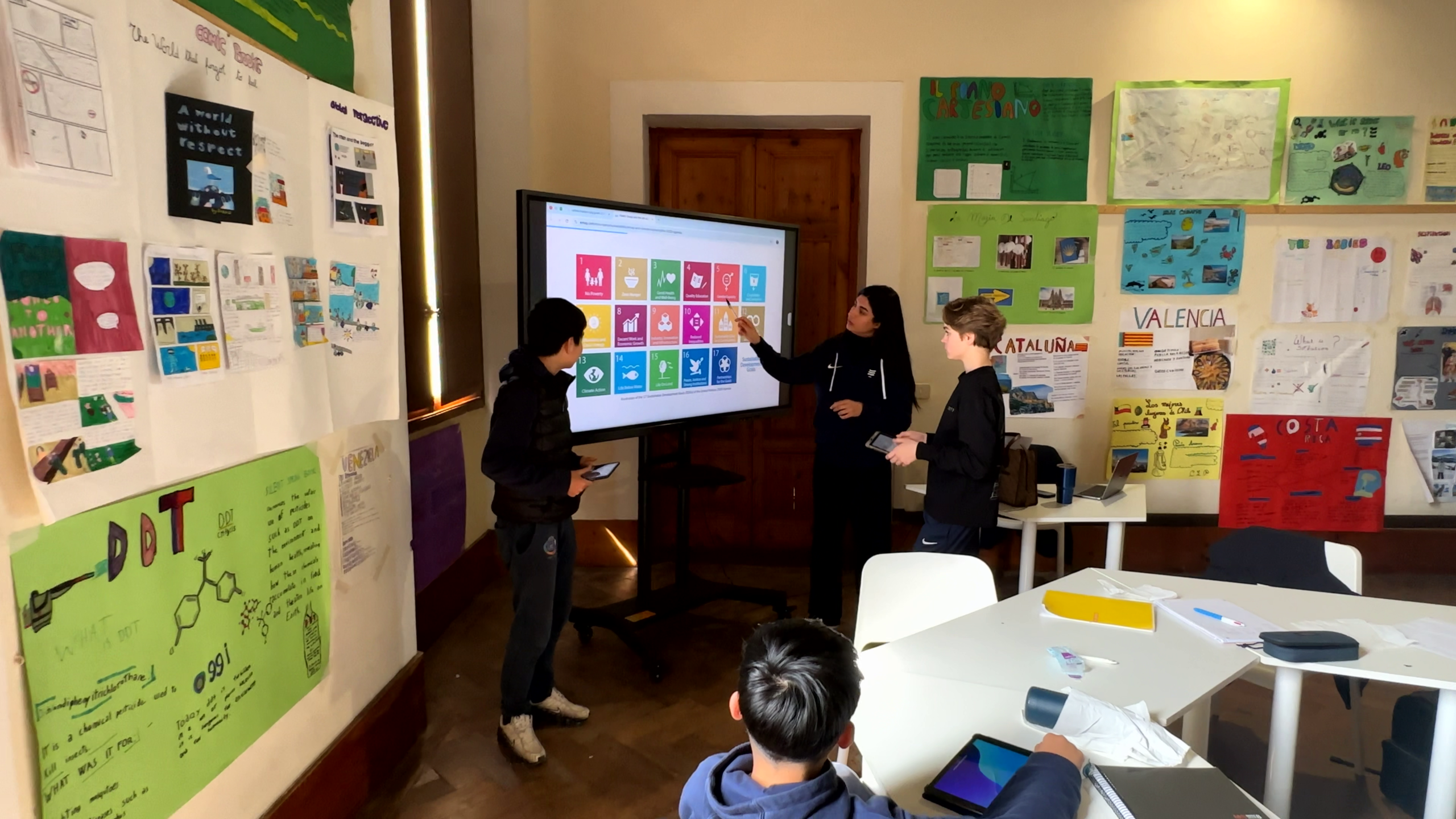
Students learn to research reliable sources, evaluate data, develop arguments, work in groups and present their own ideas clearly. They aren't simply given answers. They learn to ask better questions.
More than a subject, Global Perspectives is a way of learning.
Start From a Real Problem
Examine Different Cultural Perspectives
Propose Possible Solutions
Reflect on the Impact
In doing so, students develop some of the skills most in demand from universities and the world of work: critical thinking, research, collaboration, communication and the ability to tackle complex problems.
This is one of the things that makes the Cambridge AICE Diploma a pathway deeply oriented towards the future.
Because preparing students doesn't just mean transmitting knowledge.
It means helping them understand the world they will live in.
At EIS Versilia, Global Perspectives is one of the pillars of the Cambridge pathway. Through interdisciplinary projects, debates, research, public speaking and collaborative activities, students learn to examine major contemporary issues with critical thinking, international openness and a sense of responsibility. For us, educating means shaping young people capable not only of facing the future, but of helping to build it.