
What a School Choice Actually Determines
Choosing a school is often framed as a comparison of curricula, fees and locations. Underneath that comparison sits a more consequential question: whether the years spent in a given school will leave a student equipped for a world that cannot be fully predicted — and whether those years will have been worth living, not simply worth completing.
Educa International School Versilia was designed around that question, rather than around a list of exam results.
Beyond a Marketing Phrase
Many schools describe themselves as preparing students for the future. Fewer can explain what that means inside an actual classroom, on an ordinary morning.
At EIS Versilia, readiness for the future is not layered on top of a conventional timetable — it shapes the timetable itself. The design rests on a straightforward premise: the professions of the next two decades, across engineering, medicine, design, finance, aviation and the arts, will all be shaped by artificial intelligence, automation and advanced technology. A strong academic foundation is what allows a student to direct these tools rather than be directed by them.
For that reason, fundamentals such as mathematics, scientific reasoning, and command of written and spoken language remain central, with advanced technological disciplines built on top of that foundation rather than substituted for it. A student who can operate a technology but cannot reason through the problem underneath it has acquired a shortcut. A student equipped with both has a foundation.
Where Technology Sits in the Curriculum
Rather than confining artificial intelligence, robotics and aerospace to occasional electives, EIS Versilia builds these subjects into the structure of learning itself, alongside a serious commitment to music, visual art and competitive sport.
Artificial Intelligence
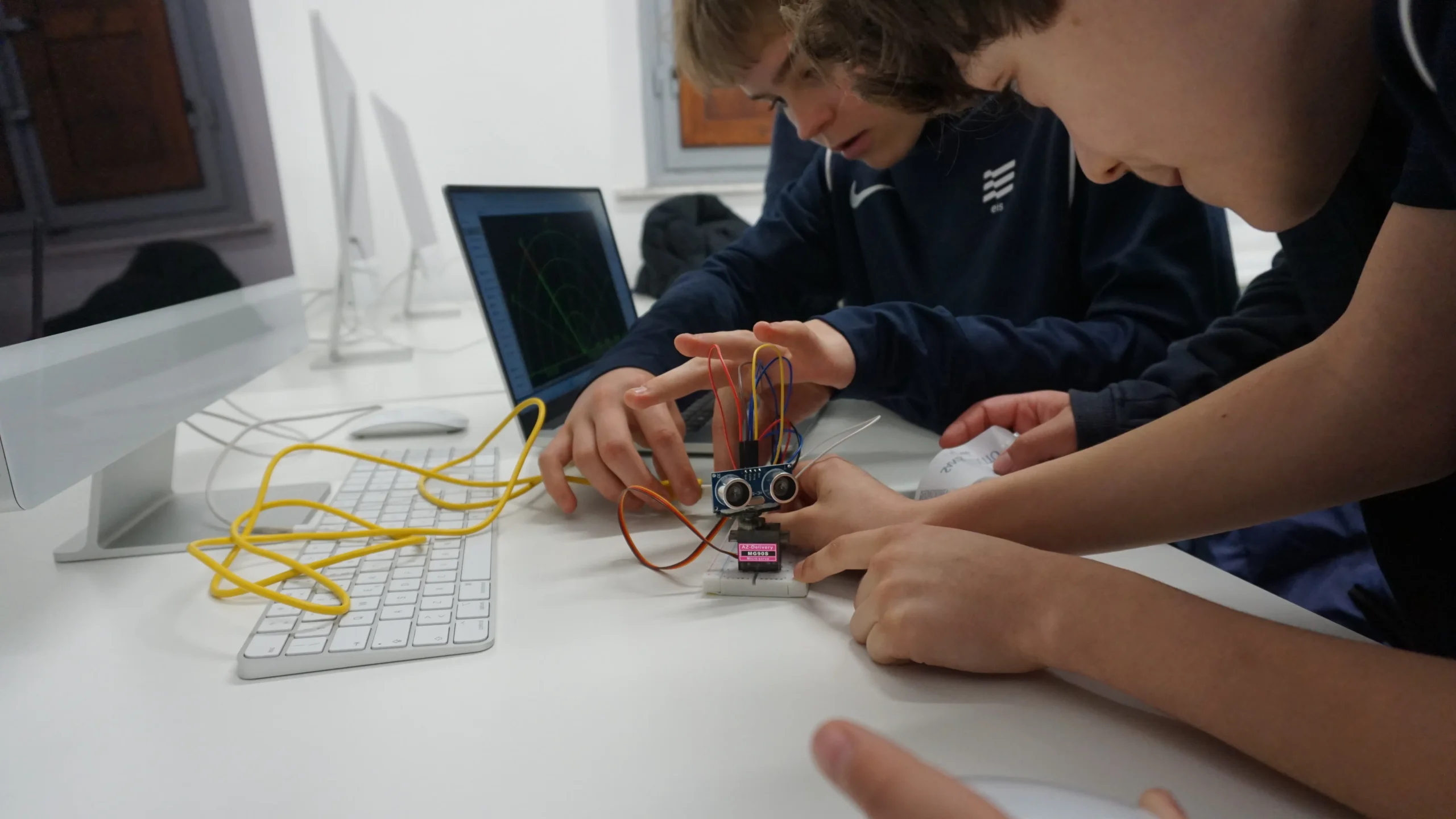
Introduced as a working tool across subjects rather than isolated in a single computer science class. Students learn to evaluate AI systems critically, understand their limitations, and apply them to research, design and problem solving.
Robotics & Engineering
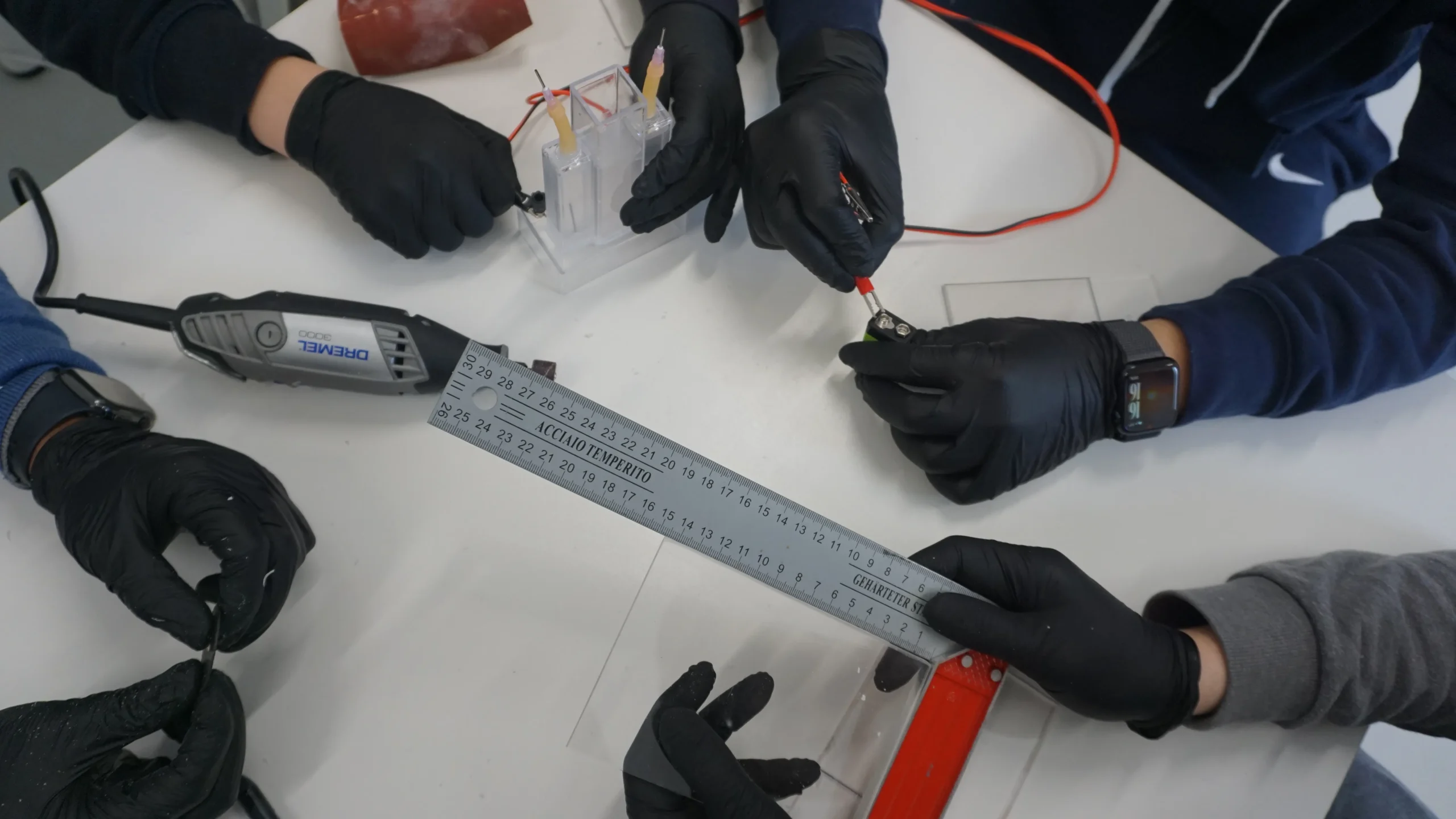
Direct experience with the cycle of designing, building and testing — the same cycle that underlies product development and applied research in industry. Failure within that cycle becomes instructive rather than something to be avoided.
Aerospace
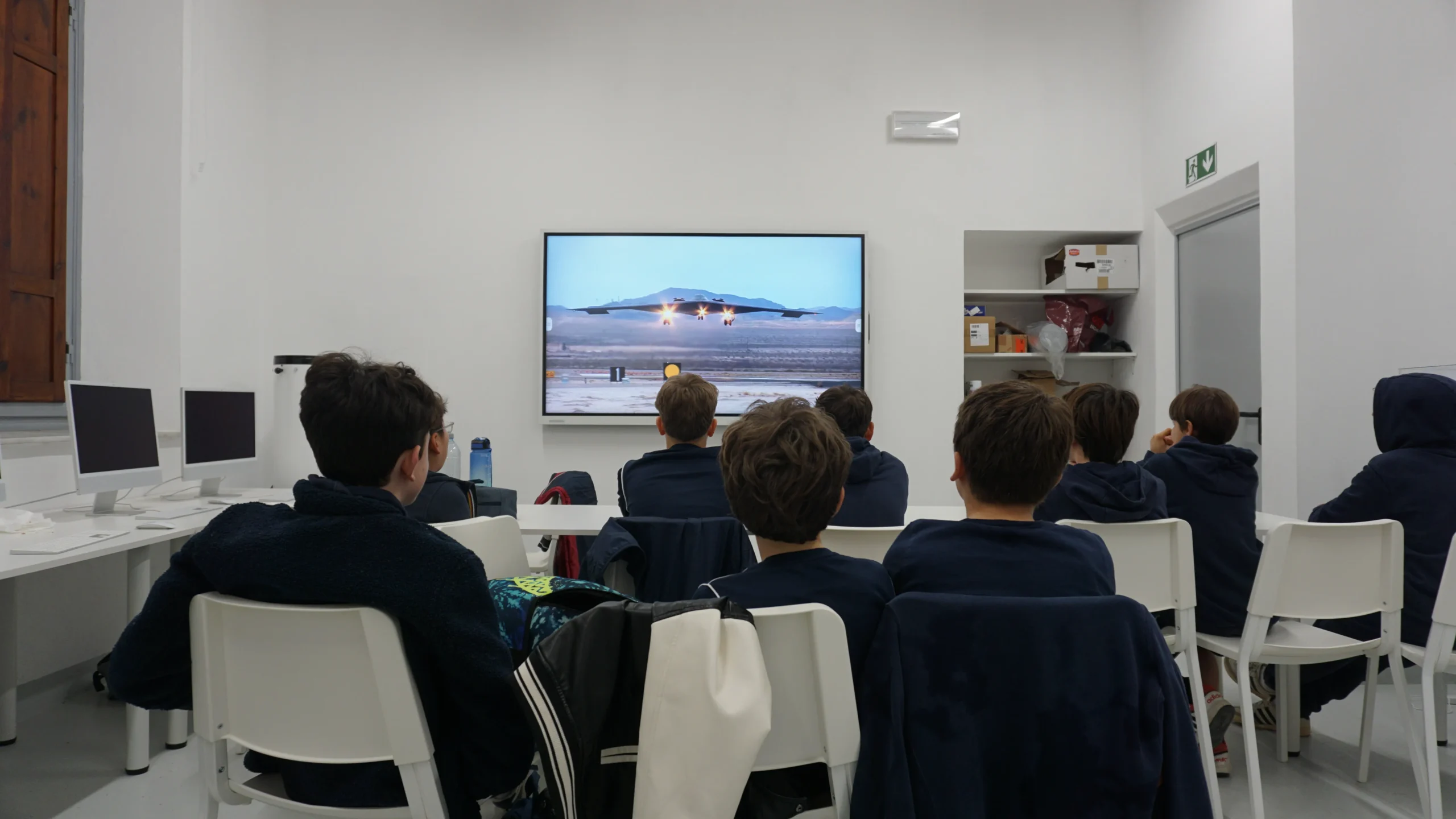
Structured exposure to aerodynamics, flight systems and the fundamentals of orbital mechanics — rare among secondary schools anywhere in Europe, and typically reserved for university level study.
Art & Music
Treated as disciplines requiring rigour and technical skill, not simply enrichment periods. Composition, design thinking and digital tools sit alongside traditional craft, reflecting how creative industries currently operate.
Competitive Sport
Developed for competitive growth as well as for the habits that carry into every other part of life: preparation, resilience, teamwork, and recovery from setbacks.
The intention is not that every student becomes an engineer, a musician or an athlete. The intention is that every student, regardless of eventual path, graduates having worked directly with the tools and disciplines shaping the next generation of professional life — and having discovered, through direct experience rather than abstract description, where genuine aptitude and interest lie.
Fundamentals First, Technology Added
A concern sometimes raised about technology-forward schools is that depth gets sacrificed for novelty. The opposite holds at EIS Versilia, and the reasoning behind that is worth stating plainly.
Advanced technology without strong fundamentals produces graduates who can operate tools without being able to evaluate them — a real limitation in professions where judgment matters as much as execution. The sequence at EIS Versilia is deliberate: solid grounding in core academic disciplines comes first, with technological fluency built on top of that base.
A graduate leaves not simply knowing how to use an AI model or a flight simulator, but understanding the mathematics and physics underneath — the difference between operating a tool and mastering a discipline.
An Education Lived, Not Merely Attended
Some versions of international schooling could occur in almost any city, with a well-equipped campus, an international faculty and a strong curriculum producing broadly the same result regardless of location. That description does not fit what a Tuscan setting actually contributes.
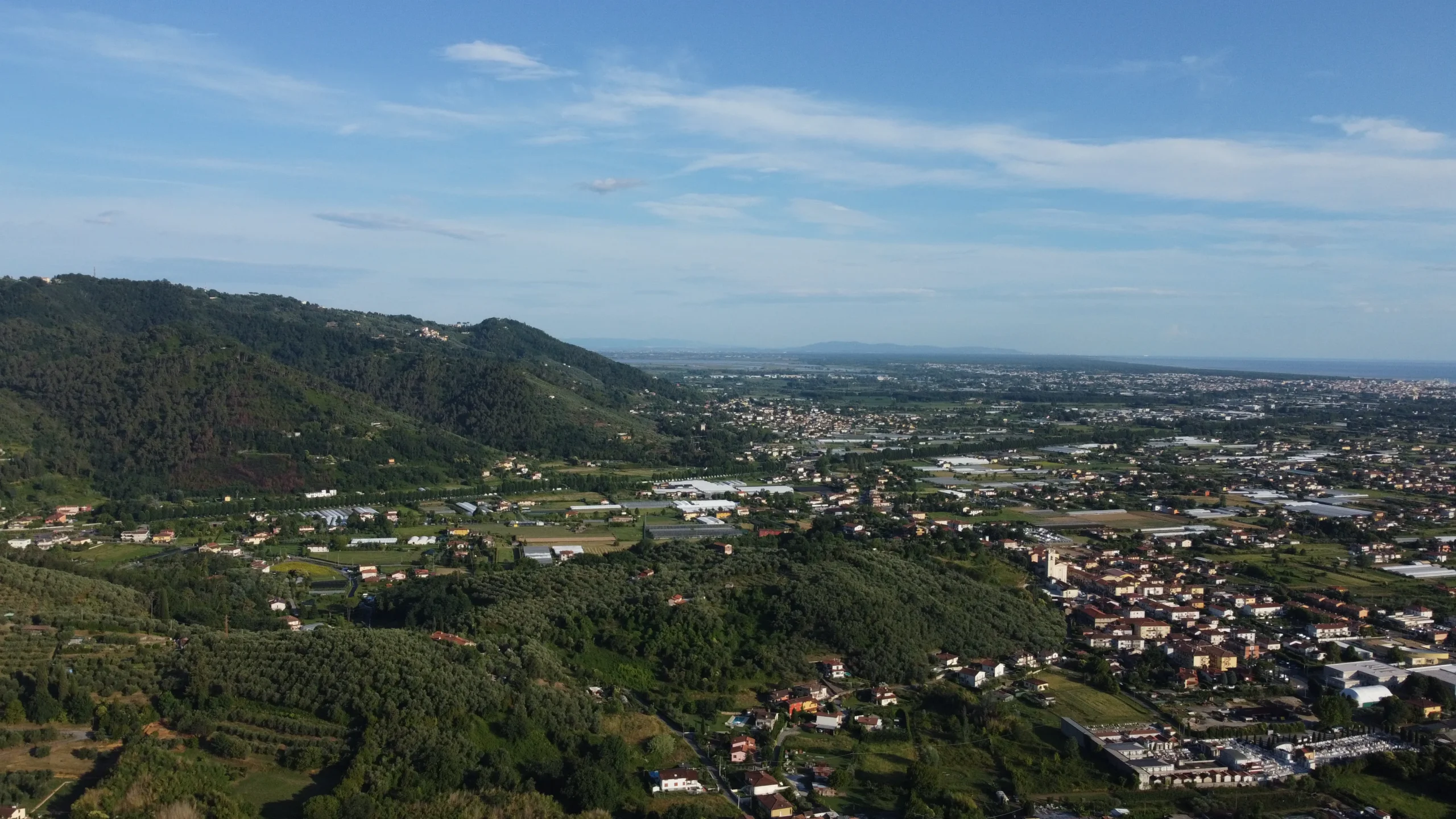
Versilia sits between the Apuan mountains and the Tyrrhenian coast, in a region that has shaped European art, craftsmanship and cuisine for centuries. At EIS, this setting is not treated as an occasional excursion attached to an otherwise generic curriculum. It is folded into daily and weekly life through the rhythm of the Italian day, the food, the language spoken in town, and the surrounding landscape functioning as a constant, ambient teacher. A term, a semester or a full year spent here amounts to more than study conducted in Italy — it becomes an unhurried, sensory, craft-attentive way of living that tends to outlast the content of any particular exam.
This dimension matters more than most school descriptions acknowledge. Adolescence is a period in which identity takes shape, and the environment surrounding a young person during these years shapes them as thoroughly as any syllabus. A school decision of this kind determines not only an academic outcome, but the texture of several formative years — and frequently, some of the most vivid memories carried into adulthood.
What a Thorough Evaluation Should Cover
Certain questions consistently separate a strong school choice from a mediocre one, and are worth examining directly.
-
Breadth vs. early specialisation
Whether a student risks specialising too early or arriving unprepared for a specific path. The structure at EIS Versilia builds broad fundamentals for every student while allowing genuine early exposure to specialised fields, including aerospace, robotics, artificial intelligence, the arts and competitive sport, so that direction emerges from real experience rather than early guesswork or a fixed track chosen at fourteen.
-
Built for which economy
Whether a school is built for the economy that has already passed or the one still forming. Deliberate inclusion of artificial intelligence, robotics and aerospace alongside traditional academics signals active design around where professional life is heading, not where it has already been.
-
The student community
Whether the surrounding student community enriches the experience or narrows it. An international student body drawn from multiple countries, combined with genuine immersion in Italian community life, produces both a global peer network and daily contact with a language and culture outside a student's own — a combination difficult to replicate in a school built around a single nationality, regardless of location.
-
Years remembered, not just logged
Whether the years spent will be remembered as formative or simply logged as time completed before university. This question receives the least attention despite mattering the most. A school built around a Tuscan setting, hands-on making, competitive sport, music and art, and genuine cultural immersion, is structured to produce a strong academic record and a set of years remembered among the best of a young life — an outcome that also correlates with the confidence and motivation associated with strong results afterward.
-
How the student actually learns
Whether the school's environment matches how a given student actually learns. A student who thinks through building, competing, performing or creating, rather than only through reading and writing, is often underserved by a purely academic environment. A school where robotics laboratories, sport, music and art carry the same institutional weight as mathematics and language is built for that kind of learner, without requiring academic rigour to be sacrificed in the process.